
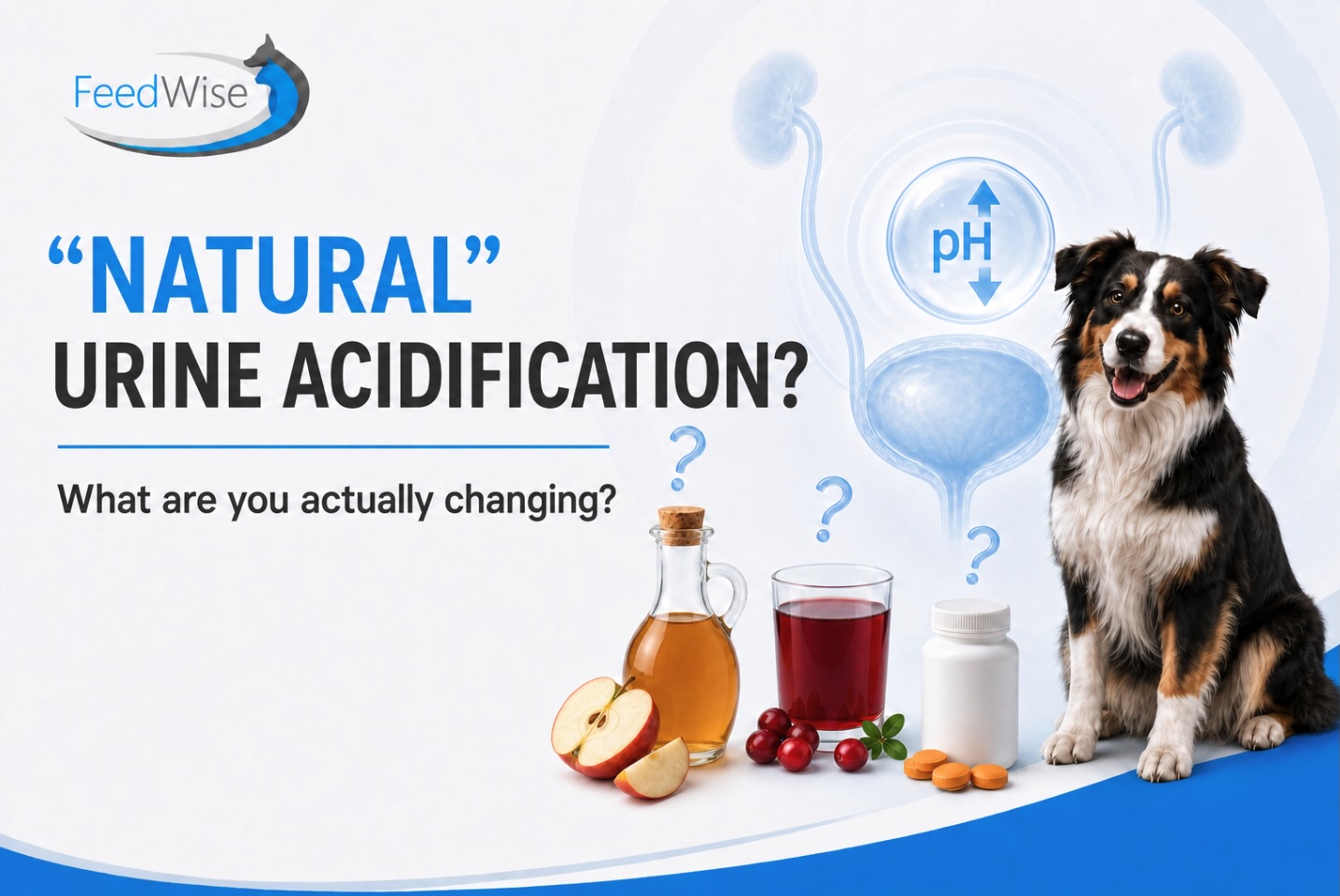
Apple cider vinegar, cranberry and vitamin C look like natural solutions for struvite, but their effect on urine is unpredictable. Without a diagnosis, well-meant adjusting can backfire.
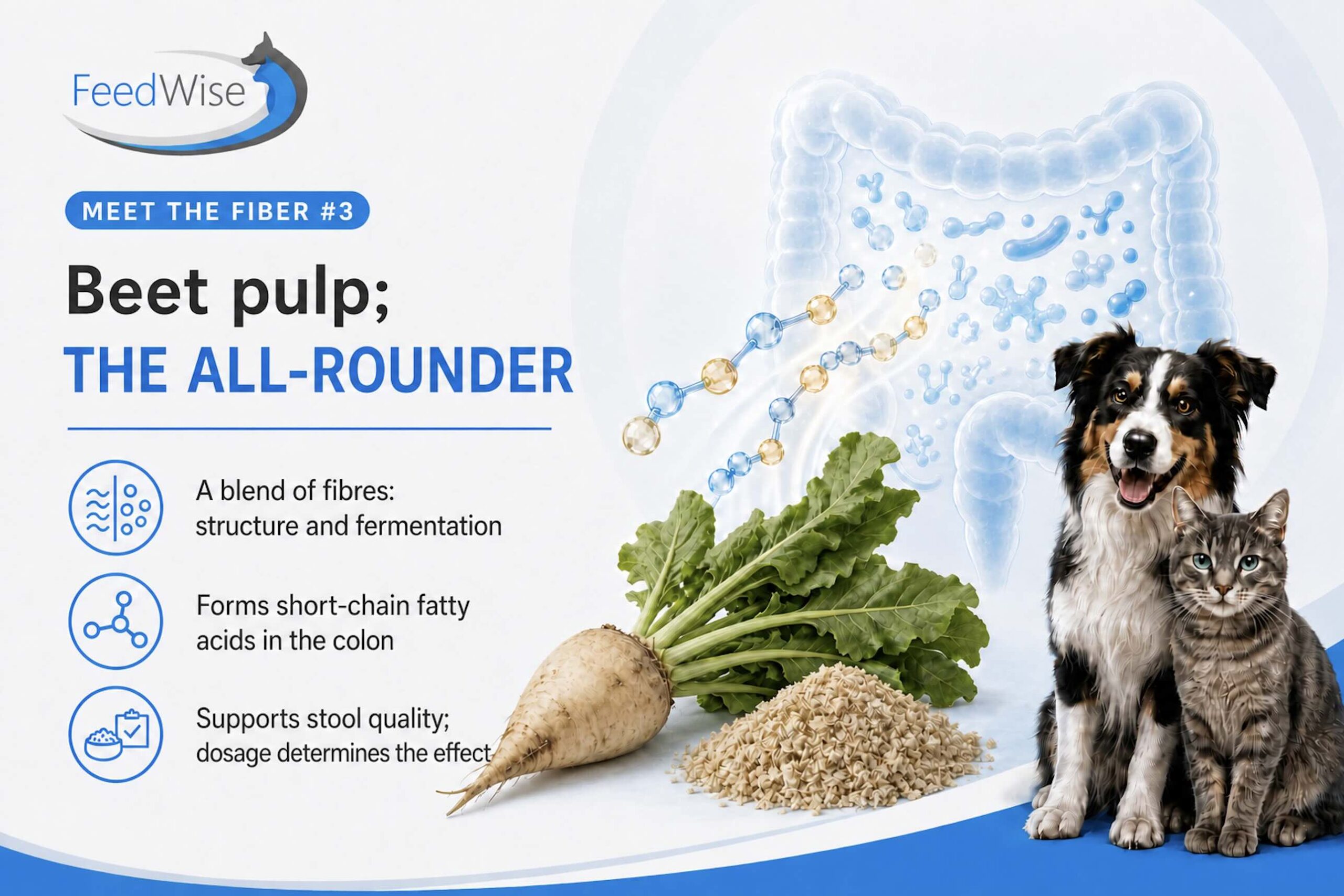
Beet pulp is not a cheap filler but a versatile fibre combining fermentation and structure. Dosage and the overall fibre mix determine its effect on gut and stools.
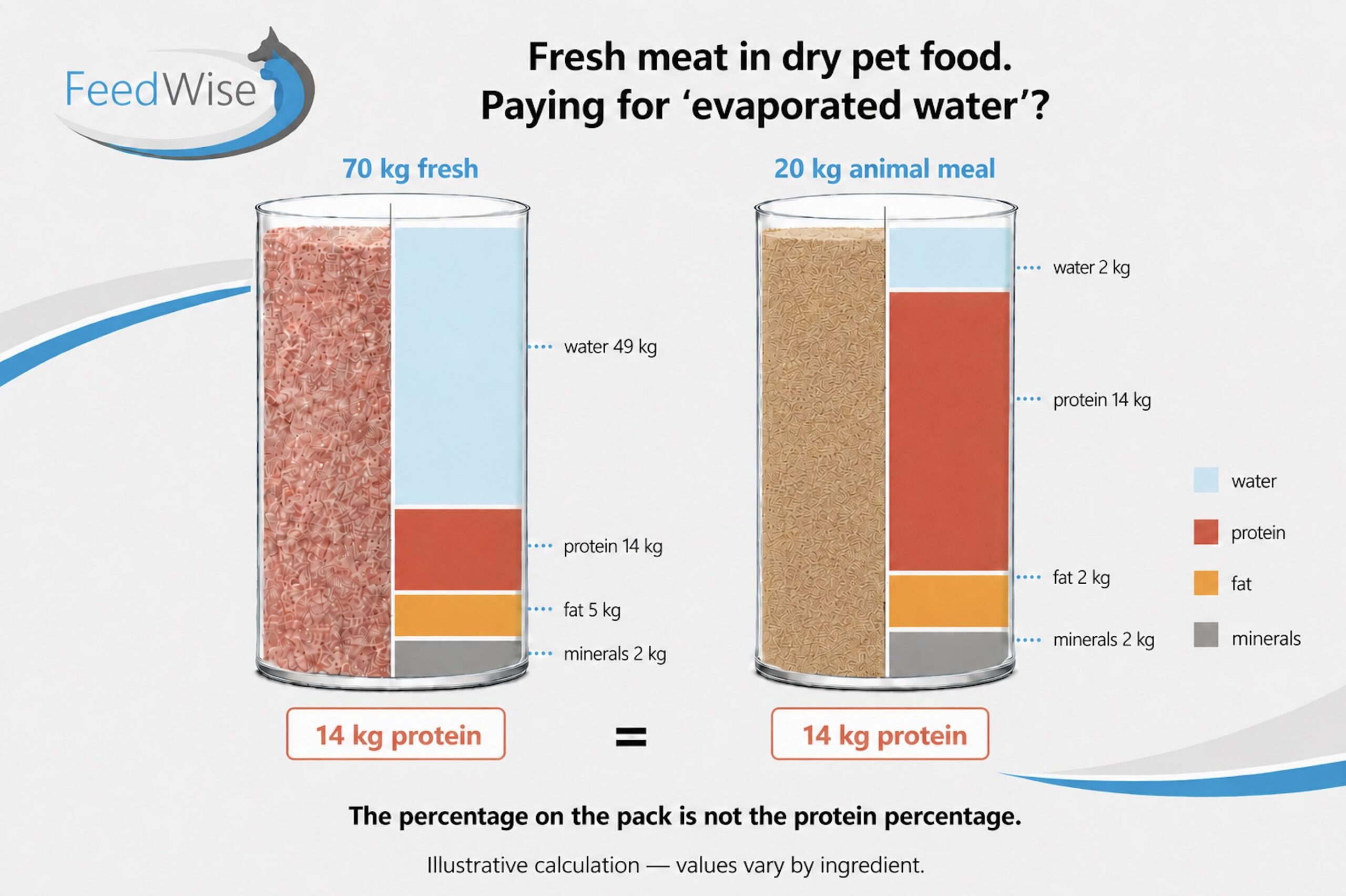
A high fresh meat claim sounds protein-rich, but much of it is water that evaporates during production. What counts is the nutrients the finished food actually delivers.
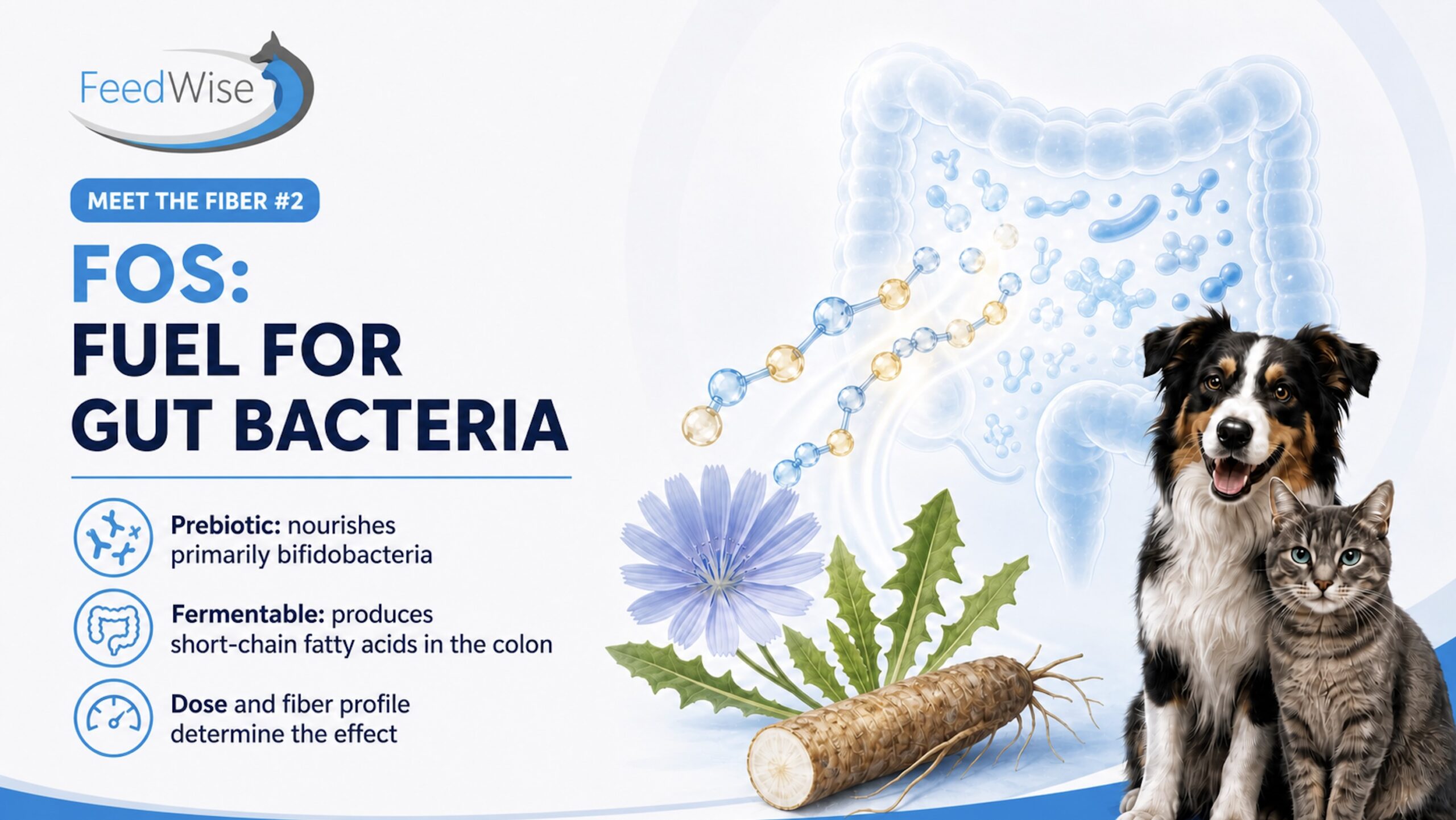
This edition of Meet the Fiber: FOS. FOS mainly feeds bifidobacteria in the colon and is considered a prebiotic. Its effect depends on dose, fibre profile and the individual patient.

Meet the Fiber #1: psyllium. Not a microbiome fibre but a water manager. Why it can help in both diarrhoea and constipation, and why water intake always belongs in the advice.

The label 'puppy' or 'adult' tells you little about a diet's composition. Look beyond the category: at the nutrients, the feeding amount and the puppy's growth.
No Category
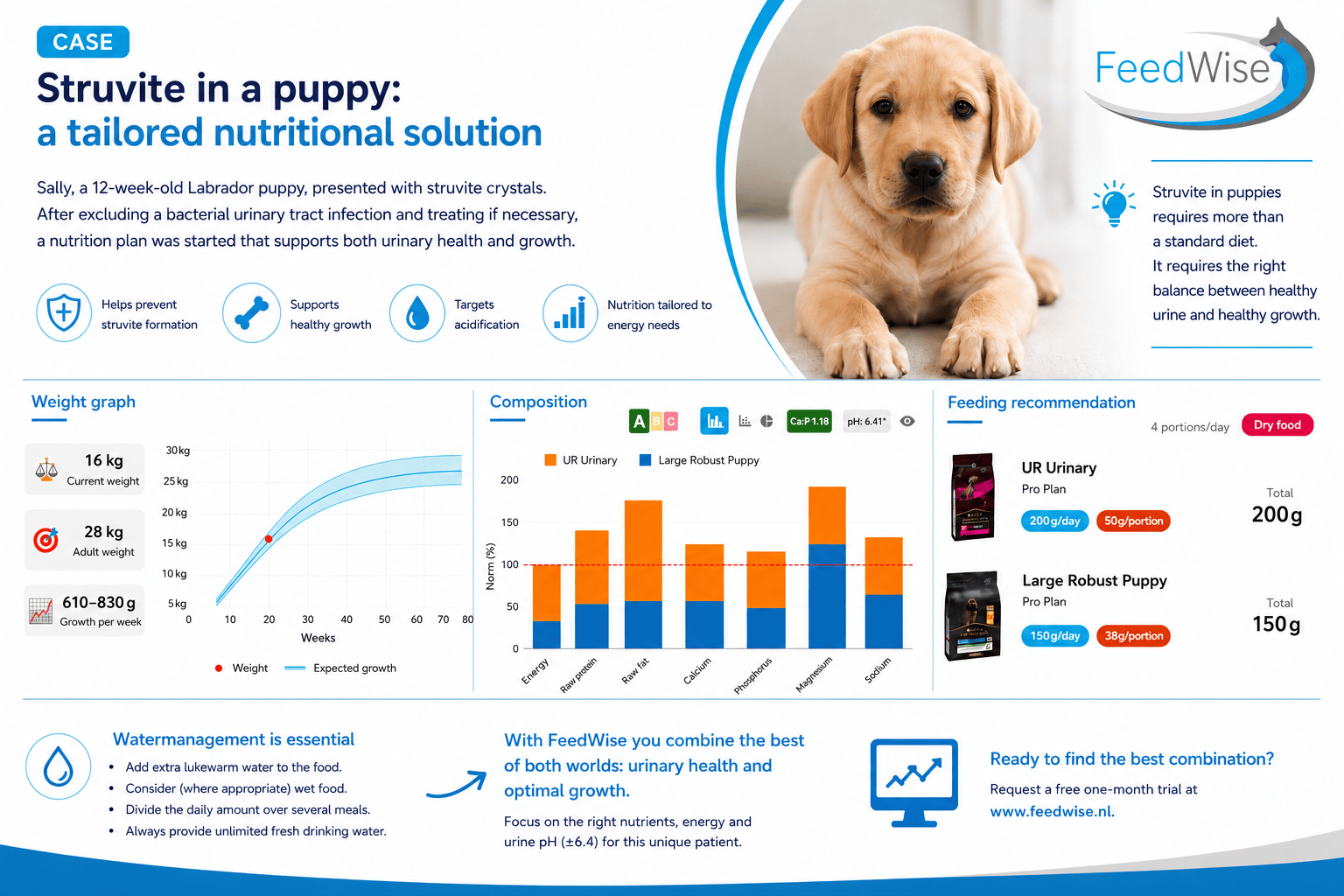
Struvite in a puppy calls for a tailored approach: investigating a urinary tract infection plus a diet combining urinary health, sufficient nutrients, energy and healthy growth.

No Category
Some urinary diets use extra sodium to stimulate drinking. Especially in hot weather, unlimited fresh water, deliberate prescribing and periodic monitoring are essential.
Measuring a urine pH of 8? Look at the context first. Meal timing, sampling moment, sample freshness and infection all affect pH. A high reading calls for interpretation, not immediate acidification.
No Category
Less is more: in gastrointestinal cases, recovery usually starts with a well-chosen base diet. Supplements can add value, but only when used with a clear purpose.