
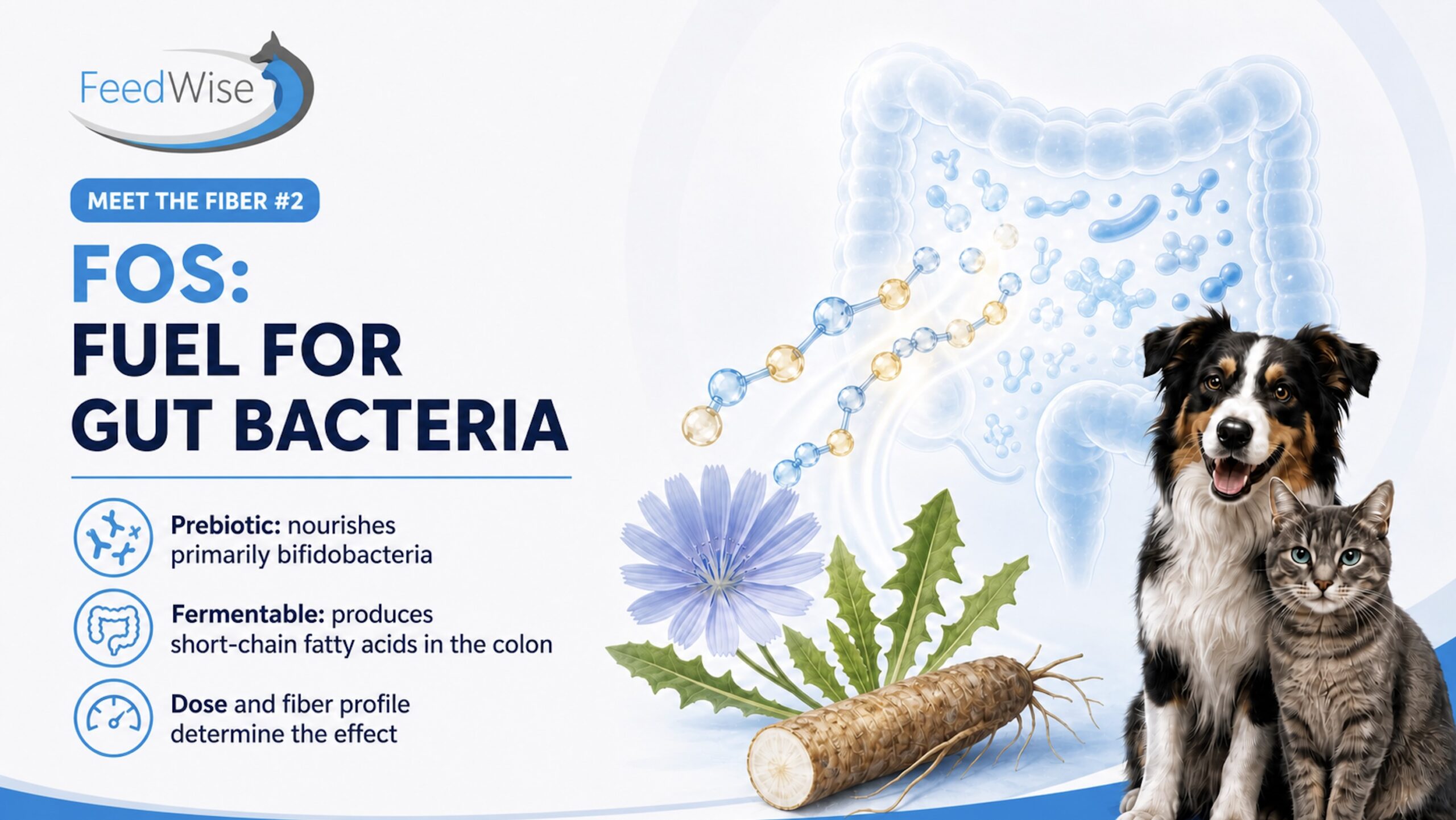
This edition of Meet the Fiber: FOS. FOS mainly feeds bifidobacteria in the colon and is considered a prebiotic. Its effect depends on dose, fibre profile and the individual patient.

Meet the Fiber #1: psyllium. Not a microbiome fibre but a water manager. Why it can help in both diarrhoea and constipation, and why water intake always belongs in the advice.

Earlier we looked at the feeding advice on the packaging. This time: how much energy do treats really provide, and how do you capture them in the dietary history?

Packaging feeding guides assume the food is the only energy source. Snacks and chews count too — look at the complete ration.

The label 'puppy' or 'adult' tells you little about a diet's composition. Look beyond the category: at the nutrients, the feeding amount and the puppy's growth.
No Category
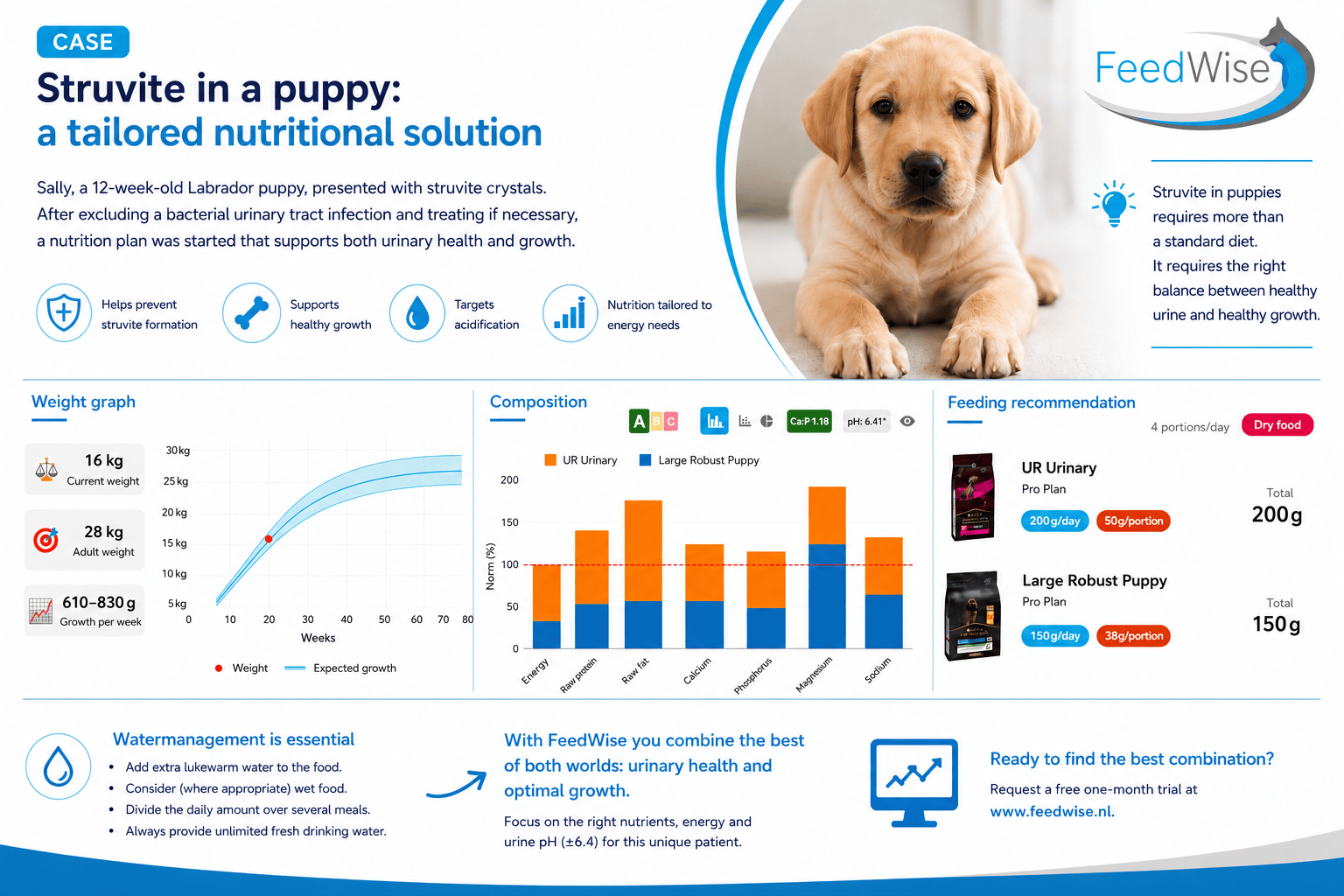
Struvite in a puppy calls for a tailored approach: investigating a urinary tract infection plus a diet combining urinary health, sufficient nutrients, energy and healthy growth.

No Category
Some urinary diets use extra sodium to stimulate drinking. Especially in hot weather, unlimited fresh water, deliberate prescribing and periodic monitoring are essential.
Measuring a urine pH of 8? Look at the context first. Meal timing, sampling moment, sample freshness and infection all affect pH. A high reading calls for interpretation, not immediate acidification.
No Category
Less is more: in gastrointestinal cases, recovery usually starts with a well-chosen base diet. Supplements can add value, but only when used with a clear purpose.
No Category
Treats seem harmless, but they can significantly affect a medical nutrition plan. Match them to the condition and keep them below 10% of daily energy.